Inquiry
Form loading...

2026 Best CNC Brass Manufacturers for Global Buyers?

Choosing the right Cnc Brass manufacturer in 2026 requires more than comparing unit prices. Global buyers need dependable machining, traceable materials, stable communication, and realistic delivery commitments. Brass components may look simple, yet a small tolerance error can affect threads, sealing surfaces, or assembly performance. Experienced manufacturers should explain their alloy options, machining limits, inspection methods, and finishing capabilities clearly.

Look beyond polished websites. Request recent samples, material certificates, dimensional reports, and production photographs. Ask how the factory handles tool wear, batch variation, and nonconforming parts. A reliable supplier can describe its process from drawing review to final packing. It should also provide practical answers about lead times, packaging protection, and export documentation. Vague promises are warning signs.

Details matter.

The strongest manufacturers often support prototypes before mass production. This reduces costly surprises and reveals whether engineering teams communicate effectively. Buyers should compare equipment, operator experience, quality systems, and after-sales support together. Price still matters, but the cheapest quotation may hide inspection gaps or unstable scheduling. That risk deserves attention.

This guide reviews leading Cnc Brass manufacturers for global buyers in 2026. It considers technical capability, production consistency, certification evidence, customization support, and international service. Some companies may appear impressive but lack transparent factory information. Others may be smaller yet more responsive and technically honest. No ranking is perfect. Buyer requirements differ, and supplier performance can change over time. Independent verification remains essential before signing a long-term agreement.
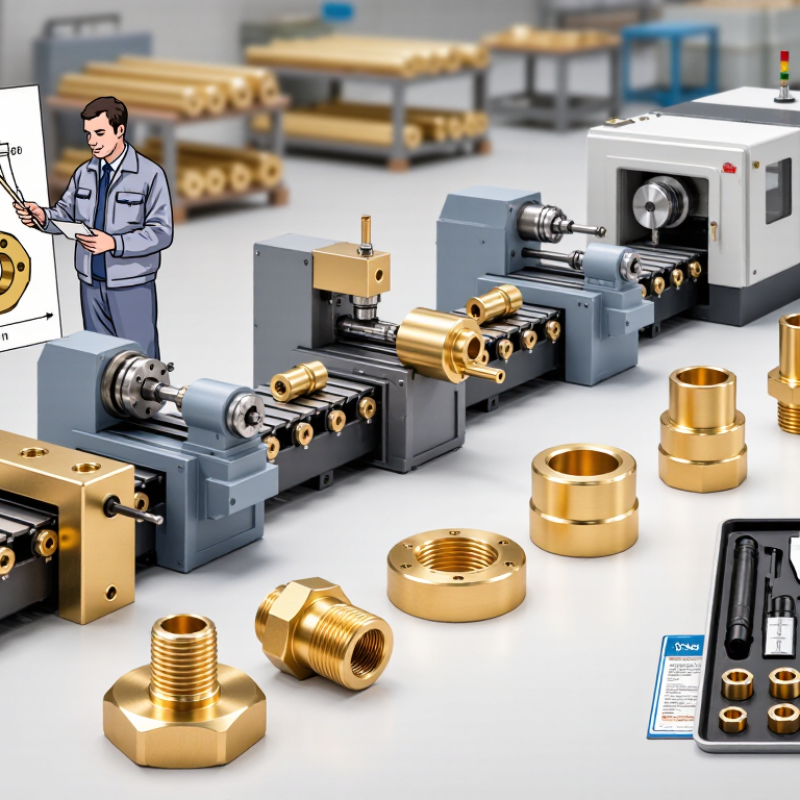
2026 Best CNC Brass Manufacturers for Global Buyers?

What Makes a CNC Brass Manufacturer “Best” in 2026?

What makes a CNC brass manufacturer “best” in 2026 is measurable control, not attractive promises. The ISO Survey 2023 recorded more than one million ISO 9001 certificates worldwide. Certification alone proves little, however. Buyers should request inspection records, material certificates, and corrective-action histories. A reliable supplier can show how each brass bar moves from incoming inspection to final packing.

Dimensional consistency remains critical. A 0.05-millimeter error can affect threads, seals, or assembly pressure. Strong manufacturers use calibrated coordinate-measuring machines, documented sampling plans, and first-article inspections. The International Trade Centre reports that manufactured goods remain central to global trade, increasing pressure for predictable cross-border quality. That pressure is real.

Traceability matters too. Lot numbers should connect material chemistry, machine settings, operators, and inspection results. The 2024 Deloitte Global Manufacturing Industry Outlook highlights digital production visibility as a continuing industry priority. Yet smaller workshops may still rely on spreadsheets. That is not automatically unacceptable. It deserves scrutiny.

Ask difficult questions. Can the factory reproduce a trial batch after six months? Can it explain rejected parts without hiding behind “normal variation”? Energy reporting, responsible material sourcing, and clear export documentation also signal maturity. I would not choose the cheapest quotation. I once underestimated packaging costs; damaged threads erased the apparent savings. In 2026, the best manufacturer combines tight machining, honest communication, and evidence that survives an audit.
Key Criteria for Evaluating CNC Brass Manufacturers

2026 Best CNC Brass Manufacturers for Global Buyers?

Evaluating a CNC brass manufacturer requires more than comparing quotations. Check machining experience, material control, inspection methods, and delivery discipline. Brass parts often show problems through burrs, tool marks, loose threads, or inconsistent surface color. Ask for sample parts from the intended grade and production route.

The 2023 ISO Survey recorded 1,265,216 ISO 9001 certificates worldwide. Certification is useful, but it does not prove every process is stable. Request first-article inspection reports, dimensional data, and batch-level material certificates. Review Cpk results for critical features, not only final inspection records. Also verify calibration control and traceability. A polished sample may still hide weak production control. That deserves scrutiny. For export projects, clarify packaging, labeling, lead times, and destination-specific material declarations. Standards such as ASTM B16/B16M can help define brass rod requirements, but drawings remain the controlling reference.

Tips: Send a complete 2D drawing and 3D model. Mark critical tolerances clearly. Ask how the factory controls tool wear during long runs. Compare rejected-part records, not just acceptance rates. Request a small pilot batch before approving full production. It may feel slower, yet it exposes weaknesses early. Examine the evidence yourself.

How CNC Brass Components Are Manufactured and Inspected

2026 Best CNC Brass Manufacturers for Global Buyers?

How CNC Brass Components Are Manufactured and Inspected

Reliable CNC brass components begin with a controlled material choice. Engineers select brass by strength, corrosion resistance, conductivity, and machining behavior. The supplier should provide a material certificate and record the heat or batch number. This traceability matters when buyers repeat an order months later.

The process starts with brass bar or plate, cut slightly larger than the finished part. A CNC lathe or mill removes material through programmed tool paths. Sharp carbide tools help produce clean threads, bores, and shoulders. Cutting speed, feed rate, and coolant must match the brass grade. Poor settings can create burrs, chatter, or smeared edges. Small details matter.

After machining, operators deburr each component and clean away chips and oil. Inspectors check critical dimensions with micrometers, calipers, pin gauges, and thread gauges. For tighter requirements, a coordinate measuring machine records several points automatically. Surface finish may be tested with a roughness instrument. Visual inspection still catches dents and discoloration.

Inspection records should include drawing revision, measured values, quantity checked, and equipment status. A first-article inspection can expose programming errors before mass production begins. Sampling plans reduce cost, but sampling is not perfect. One acceptable piece cannot prove every piece is identical. Experienced teams review trends, not only pass-or-fail results. Even careful machining leaves room for human judgment.

2026 Best CNC Brass Manufacturers for Global Buyers

How CNC brass components are manufactured and inspected: machining operations are followed by deburring, cleaning, dimensional inspection, and visual checks. The chart shows ISO 2768-1 general linear tolerance values for nominal dimensions from 6 to 30 mm. Drawing-specific tolerances take priority over these general values.

Reference: ISO 2768-1 general tolerances for linear dimensions without individual tolerance indications. Values are shown as total tolerance limits in millimetres.

Global Buyer Considerations: Certifications, Pricing, and Lead Times

Selecting a brass manufacturer in 2026 requires more than comparing unit prices. Certification evidence should match your application and destination market. ISO’s Survey 2023 recorded over 1.2 million ISO 9001 certificates worldwide, yet certification alone does not prove process control. Ask for the certificate scope, expiry date, audit body, and inspection records. For automotive or regulated applications, request relevant quality and material documentation before sampling.

Pricing needs a transparent breakdown. A reliable quotation separates brass grade, material weight, machining time, tooling, surface treatment, inspection, packaging, and freight. World Bank commodity reports identify base-metal price volatility as an ongoing procurement risk. Therefore, confirm the quotation’s validity period and adjustment formula. A low price may hide loose tolerances or expensive rework. I have seen this happen. Measure twice.

Lead time should include engineering review, sample approval, production, inspection, and shipping. Do not accept “15 days” without defining the starting point. Ask about daily capacity, machine availability, buffer stock, and recovery plans for material delays. Add realistic time for customs clearance and holiday shutdowns. A supplier promising everything immediately may be optimistic, or inexperienced.

Tips: Request a first-article inspection report, material certificate, capability data, and three recent delivery records. Compare total landed cost, not only the brass part price. Keep a small pilot order before scaling. It may feel slower, but it exposes weak communication early. Recheck tolerances after plating or heat exposure, because brass dimensions can shift during finishing.

2026 Best CNC Brass Manufacturers for Global Buyers? - Global Buyer Considerations: Certifications, Pricing, and Lead Times

Anonymous Supplier Profile Typical CNC Capability Common Brass Grades Typical Tolerance Relevant Certifications Indicative Unit Price* Prototype Lead Time Production Lead Time Best Fit for Global Buyers
Profile A — High-Volume Precision CNC turning and milling; automatic-bar-fed production; repeat orders C360 free-cutting brass; C385 architectural brass Typically ±0.01–0.03 mm, subject to feature size and drawing requirements ISO 9001; material mill certificates; RoHS/REACH declarations when required US$0.40–3.00 at 10,000+ pieces 7–14 calendar days 20–35 calendar days Electrical terminals, fittings, valves, and repeat production programs
Profile B — Low-Volume Custom Parts 3-axis and 4-axis milling; CNC turning; short-run manufacturing C360; C464 naval brass; C932 bearing bronze when specified Typically ±0.02–0.05 mm for standard machined features ISO 9001 or equivalent quality system; inspection reports; material traceability US$8–35 per part for 10–100 pieces 5–10 calendar days 15–28 calendar days Engineering prototypes, replacement parts, and small product launches
Profile C — Complex Mill-Turn Components 5-axis machining and mill-turn; multi-face parts completed in fewer setups C360; C693 lead-free brass; dezincification-resistant brass grades Typically ±0.01–0.02 mm on controlled dimensions ISO 9001; first-article inspection; RoHS/REACH documentation where applicable US$18–75 per part for 50–500 pieces 10–18 calendar days 25–45 calendar days Compact manifolds, instrument bodies, aerospace-style prototypes, and complex housings
Profile D — Plumbing and Fluid-Control Parts CNC turning, drilling, tapping, deburring, and pressure-test support C377 forged brass; C465 naval brass; lead-free brass where regulations require Typically ±0.03–0.08 mm, with tighter control for sealing surfaces ISO 9001; pressure-test records; material certificates; applicable sanitary or drinking-water compliance documentation US$1.20–9.00 at 1,000–20,000 pieces 10–20 calendar days 30–50 calendar days Adapters, connectors, valve bodies, manifolds, and water-service components
Profile E — Decorative and Consumer Hardware CNC turning and milling with polishing, brushing, plating, or clear coating C360; C464; C260 cartridge brass for selected forming and appearance requirements Typically ±0.03–0.10 mm, depending on cosmetic and functional requirements ISO 9001; finish samples; coating thickness or appearance inspection records US$1.50–15.00 at 500–10,000 pieces 12–20 calendar days 30–55 calendar days Furniture hardware, lighting components, consumer products, and visible fittings
Profile F — Regulated Industrial Components CNC turning and milling with controlled documentation, batch traceability, and inspection planning C360; C693; C274 or other specified low-lead grades Typically ±0.01–0.05 mm, based on the approved drawing and inspection plan ISO 9001; ISO 14001 or ISO 45001 may be available; full material and inspection traceability US$5–40 per part at 100–5,000 pieces 15–25 calendar days 35–60 calendar days Industrial sensors, control equipment, power systems, and documentation-sensitive projects
Buyer note: Prices are indicative 2026 market ranges in USD per machined part, excluding tooling, plating, taxes, freight, packaging, and expedited charges. Actual quotations depend on brass grade, part weight, geometry, tolerances, order quantity, surface finish, inspection requirements, and delivery destination. Certification availability and regulatory acceptance should be verified against the final purchase specification.

Comparing CNC Brass Manufacturers by Capabilities and Applications

Choosing a CNC brass manufacturer requires more than checking hourly rates. Compare spindle power, five-axis access, tolerance control, and inspection depth against the part’s application. A supplier making plumbing valves needs different experience from one producing miniature electrical terminals.

The International Federation of Robotics reported 541,302 industrial robot installations worldwide in 2023. This growth signals stronger demand for automated, repeatable machining. Ask whether a manufacturer uses robotic loading, in-process probing, and digital tool monitoring. These systems matter when brass components require ±0.01 mm tolerances across large batches. However, automation alone proves little.

Capability must match material and geometry. Brass grades vary in machinability, lead content, strength, and corrosion behavior. Experienced manufacturers should identify the alloy, cutting speed, coolant method, and chip-control strategy before quoting. For threaded connectors, inspect burrs and thread gauges. For medical or fluid-control parts, request traceability, surface-finish records, and material certificates.

The 2024 World Robotics report also shows manufacturing is becoming more data-driven, but reports do not measure every workshop fairly. A smaller facility may still deliver better prototypes through skilled operators and careful setup sheets. That is easy to overlook. Review sample inspection reports, first-article results, rejection rates, and production photos. Compare evidence, not promises.