Choosing a reliable Cnc Brass manufacturer requires more than comparing prices or browsing polished websites. Global buyers must examine machining accuracy, brass alloy control, production capacity, inspection systems, and communication habits. A supplier may promise ±0.01 mm tolerances, yet the real test appears on the inspection report and finished part. Threads should feel clean. Edges should be properly deburred. Surfaces should match the approved sample under consistent lighting.
Dr. Joseph M. Juran, a respected authority on manufacturing quality, stated, “Quality comes not from inspection, but from the improvement of the production process.” This principle is highly relevant to Cnc Brass production. Strong manufacturers control tooling wear, cutting speed, coolant use, and material traceability before defects reach inspection. They also understand how brass grades affect conductivity, strength, color, and machinability. That practical knowledge can protect buyers from costly rework and delayed shipments.
This guide introduces ten leading Cnc Brass manufacturers serving international customers. Each company should be considered through evidence, not reputation alone. Look for clear factory information, responsive engineering support, stable lead times, and documented quality procedures. Ask for sample parts.
No ranking is perfect. Supplier performance can change with management, equipment, or order volume. Buyers should still request drawings, material certificates, first-article samples, and realistic delivery commitments. A dependable partner is not always the largest factory. Sometimes, the better choice is the manufacturer that answers precise questions and admits limitations before production begins.
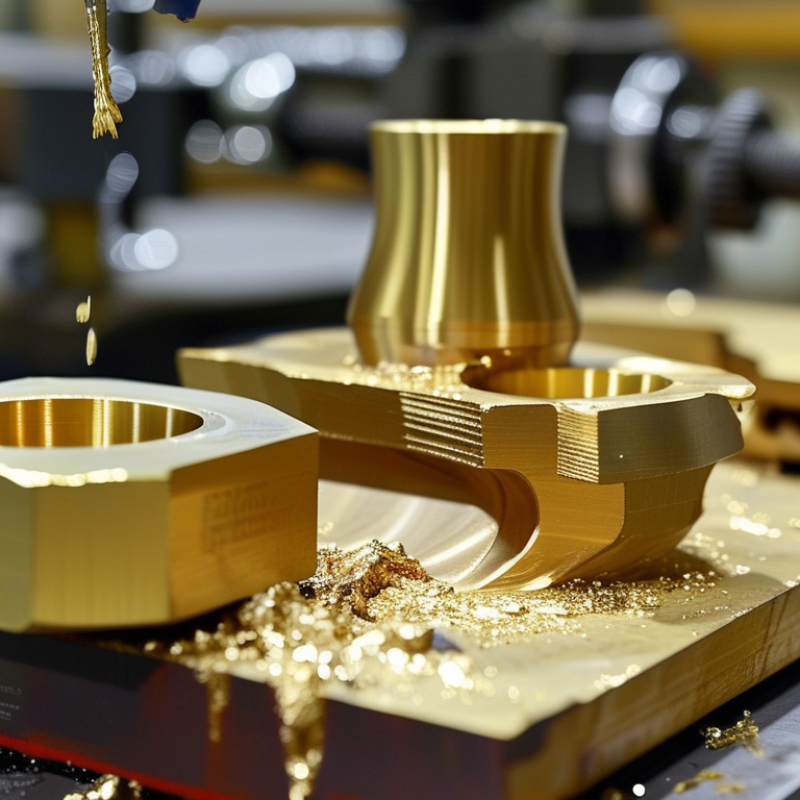
CNC brass manufacturing means removing material from brass bars with computer-controlled lathes or milling machines. The process creates precise fittings, valves, connectors, inserts, and decorative hardware. Brass cuts smoothly, resists corrosion, and supports stable threads. However, its softness can cause burrs, tool wear, or slight deformation during clamping.
In practical production, engineers select the alloy, bar diameter, tooling, feeds, and cooling method before machining. A small thread may require a sharp insert and controlled spindle speed. After machining, operators check dimensions with micrometers, thread gauges, and coordinate measuring machines. Surface finish also matters. A part can meet drawing dimensions yet feel rough in assembly.
China leads much of this market because its supply chain connects brass mills, toolmakers, machining workshops, finishers, and inspection services. Buyers can often source prototypes and larger batches through one regional network. Experienced factories also manage drawings, tolerances, packaging, and export documentation with organized procedures. Still, supplier quality varies widely. A low quotation may hide weak inspection or unclear material records. That deserves attention.
Reliable buyers request samples, material certificates, inspection reports, and clear tolerance agreements. They should also confirm how the factory controls lead content, burrs, plating thickness, and batch traceability. These checks take time. They prevent expensive surprises later. Even experienced teams sometimes overlook packaging pressure, which can damage polished brass surfaces during transport. A careful manufacturing partnership grows through evidence, not promises.
What CNC Brass Manufacturing Means and Why China Leads the Market
The chart compares the typical relative machinability ratings of widely used brass alloys. C36000 is used as the reference value of 100. Higher machinability generally supports faster CNC cutting, smoother production, and lower tool wear. These material characteristics help explain why brass is widely selected for precision CNC components, while China’s large manufacturing base, supplier network, and export infrastructure support competitive global production.
Source basis: typical relative machinability ratings published for copper and copper alloys, with C36000 = 100 as the reference.
Evaluating CNC brass manufacturers requires more than comparing prices. Request drawings, alloy certificates, inspection records, and recent sample parts. Confirm whether the factory machines brass grades such as C36000 or equivalent materials. Ask for dimensional reports covering critical tolerances, thread gauges, surface roughness, and burr control. A supplier should explain its inspection method clearly. Avoid vague claims about “high precision.”
Use measurable evidence. The World Bank’s 2023 Logistics Performance Index gave China a score of 3.7 out of 5, supporting efficient export planning. However, logistics performance does not prove machining quality. Review production capacity, equipment age, maintenance records, and quality-control staffing. Ask for process capability data, such as Cpk results, when tolerances are tight. Compare three production batches, not one attractive sample. Small details matter.
Material traceability is essential. Match heat numbers with certificates and incoming inspection records. Check packaging, corrosion protection, labeling, and export documentation before placing a large order. The ISO Survey 2022 identified China as the largest national holder of ISO 9001 certificates, but certification alone cannot replace practical audits. Visit the facility, inspect finished parts, and speak with the quality engineer. I would also test a smaller pilot order first. A polished factory tour can still hide unstable processes. Supplier evaluation is useful, but never perfect.
Leading CNC brass companies now offer more than cutting and drilling. They support material selection, design-for-manufacturing reviews, CNC turning, milling, Swiss machining, and secondary operations. Experienced engineers check thread depth, wall thickness, burr risks, and tool access before production. Brass parts often need clean edges, stable dimensions, and reliable surface finishes.
Quality services are equally important. Leading suppliers use coordinate measuring machines, optical inspection, batch records, and material certificates. Some also provide sampling, PPAP-style documentation, laser marking, and export packaging. Deloitte’s 2024 Smart Manufacturing and Operations Survey found that 86% of manufacturing leaders view smart manufacturing as a key competitiveness driver within five years. This supports stronger digital tracking, but not every supplier has mature systems. Buyers should verify actual inspection records, not just website claims.
Tips: Request a capability sample before mass production. Confirm alloy, tolerance, finish, inspection method, and packaging details in writing. Ask how rejected parts are isolated. A low quote may hide weak process control. I have found that clear drawings prevent more defects than urgent email instructions. Even so, drawings can remain incomplete, especially around cosmetic expectations. Define those details with photographs, limit samples, and measurable acceptance criteria.
When comparing China’s top CNC brass manufacturers, global buyers should examine quality systems before reviewing prices. ISO 9001 certification can indicate controlled procedures, but it does not replace process verification. Ask for inspection records, dimensional reports, and calibration dates for measuring equipment. A reliable supplier should explain tolerance control, sampling plans, and corrective actions clearly. Vague answers are warning signs.
Material selection affects strength, machinability, corrosion resistance, and final cost. Common brass grades contain different levels of copper, zinc, lead, or other elements. Request a material certificate for every production batch, not only a general catalog statement. Portable alloy analyzers can confirm composition during an on-site audit. Surface plating also needs testing. Coating thickness, adhesion, and salt-spray results matter for fittings used in humid environments.
Production comparisons should cover drawing review, CNC turning, milling, deburring, cleaning, and final inspection. Ask how tools are replaced after visible wear. Small burrs around a 2-millimeter hole can interrupt assembly, even when the part looks acceptable. First-article approval reduces this risk. Export packaging deserves attention too; sealed bags, separators, and rust protection prevent damage during long transit. A polished sample can still hide weak batch control. This is where buyers must remain skeptical. Supplier audits, traceable records, and independent inspections provide stronger evidence than promises.
When comparing China’s top 10 CNC brass manufacturers, global buyers should request identical drawings and specifications. Include alloy grade, dimensions, tolerances, surface finish, quantity, and inspection requirements. A clear RFQ prevents vague pricing. It also exposes differences between suppliers.
Pricing usually includes material, machining time, tooling, finishing, packaging, and shipping terms. Ask whether the quotation uses EXW, FOB, or DDP conditions. Confirm currency, payment stages, sample charges, and possible revision fees. A low unit price may exclude deburring or final inspection. That mistake becomes expensive later. Production often takes 10–25 working days after approval, while samples may need 5–10 days. Complex threads, tight tolerances, or special finishes can extend the schedule.
Tips: Request a first article sample and a dimensional inspection report. Confirm brass composition and packaging before mass production. Ask for weekly progress photos, but do not treat photos as proof of quality. Independent inspection is more reliable. Export documents should match the commercial invoice, packing list, shipping details, and declared product information. Check destination requirements with your customs broker. Lead times can slip during factory maintenance or holiday periods. Build a small buffer. I have seen buyers plan perfectly, yet overlook packaging strength for long ocean transport. That detail deserves attention.
| Rank | Manufacturer Profile | Primary Production Region | Main CNC Capabilities | Typical Brass Materials | Typical Part Size | Typical Tolerance | Indicative MOQ | Indicative Unit Price | Sample Lead Time | Mass-Production Lead Time | Common Surface Options | Export Documentation | Best Buyer Fit |
|---|---|---|---|---|---|---|---|---|---|---|---|---|---|
| 1 | Profile A — High-volume precision turning specialist | Zhejiang / Yangtze River Delta | Swiss-type turning, CNC turning, automatic bar feeding, secondary drilling | C36000, C37700, CW614N, CW617N | Diameter 2–32 mm; length up to 150 mm | Typically ±0.01–0.03 mm | 500–1,000 pcs | US$0.08–3.50 per piece at 1,000 pcs | 7–12 working days | 20–35 working days | Polishing, nickel plating, chrome plating, passivation, brushing | Commercial invoice, packing list, certificate of origin, inspection report | Electrical terminals, fittings, valves, sensors and hardware |
| 2 | Profile B — Multi-axis milling and turning supplier | Jiangsu / Shanghai manufacturing corridor | 3-axis and 4-axis milling, CNC turning, tapping, thread cutting | C36000, C46400, C48500, CW508L | Up to 250 × 180 × 120 mm | Typically ±0.02–0.05 mm | 100–500 pcs | US$1.50–12.00 per piece at 500 pcs | 10–15 working days | 25–40 working days | Deburring, bead blasting, polishing, plating and clear coating | Invoice, packing list, HS-code support, material certificate, dimensional report | Industrial equipment, manifolds, connectors and mechanical assemblies |
| 3 | Profile C — Small-batch engineering parts supplier | Guangdong / Pearl River Delta | CNC milling, turning, rapid prototyping and engineering revision support | C36000, C37700, C38500, lead-free brass grades subject to specification | Up to 400 × 300 × 200 mm | Typically ±0.03–0.08 mm | 10–50 pcs | US$8.00–45.00 per piece at 50 pcs | 5–10 working days | 18–30 working days | Natural finish, polishing, brushed finish and electroless nickel | Invoice, packing list, material declaration and inspection records | Product development, prototypes, replacement parts and low-volume projects |
| 4 | Profile D — Plumbing and valve component producer | Fujian / Zhejiang coastal industrial zone | CNC turning, internal boring, thread machining and leak-test preparation | CW617N, C37700, C27400, C36000 | Diameter 5–80 mm; length up to 200 mm | Typically ±0.02–0.05 mm | 1,000–3,000 pcs | US$0.35–8.00 per piece at 3,000 pcs | 12–18 working days | 30–45 working days | Nickel plating, chrome plating, polishing and zinc-free protective coating | Commercial documents, material certificate, test report and origin documentation | Water fittings, gas components, valve bodies and sanitary hardware |
| 5 | Profile E — Connector and electrical hardware specialist | Guangdong / Shenzhen–Dongguan area | High-speed turning, micro-drilling, slotting, knurling and automatic inspection | C36000, C38500, C27400 and RoHS-compatible brass grades | Diameter 1–20 mm; length up to 100 mm | Typically ±0.005–0.02 mm | 2,000–10,000 pcs | US$0.03–1.80 per piece at 10,000 pcs | 10–16 working days | 25–40 working days | Tin plating, nickel plating, gold flash and polished natural brass | Invoice, packing list, RoHS/REACH declarations and inspection report | Cable terminals, plugs, sockets, grounding parts and control equipment |
| 6 | Profile F — Decorative and consumer hardware supplier | Guangdong / Foshan–Zhongshan area | CNC milling, turning, engraving, polishing and assembly | C36000, C37700, C46400 and architectural brass grades | Up to 300 × 200 × 150 mm | Typically ±0.03–0.10 mm | 100–500 pcs | US$2.00–20.00 per piece at 500 pcs | 12–20 working days | 30–50 working days | Mirror polishing, antique finish, brushed finish, lacquer and PVD coating | Invoice, packing list, finish approval samples and origin documents | Furniture hardware, lighting components, bathroom accessories and home products |
| 7 | Profile G — Heavy-duty industrial fitting manufacturer | Shandong / Northern China | Large-format CNC turning, milling, drilling and tapping | C37700, C46400, C48500 and high-strength brass alloys | Diameter 20–180 mm; length up to 400 mm | Typically ±0.05–0.12 mm | 50–200 pcs | US$10.00–85.00 per piece at 200 pcs | 15–25 working days | 35–55 working days | Shot blasting, polishing, protective oiling and industrial plating | Invoice, packing list, material certificate, dimensional report and export packing record | Industrial machinery, marine fittings, pumps and construction equipment |
| 8 | Profile H — OEM and private-label production partner | Jiangsu / Zhejiang manufacturing belt | CNC turning, milling, assembly, packaging and production scheduling | C36000, C37700, CW614N, CW617N and customer-specified alloys | Up to 500 × 350 × 250 mm | Typically ±0.03–0.10 mm | 300–1,000 pcs | US$2.50–35.00 per piece at 1,000 pcs | 12–18 working days | 30–50 working days | Polishing, plating, powder coating, laser marking and custom packaging | Invoice, packing list, inspection report, origin documents and customer-specific labels | Distributors, importers, private-label products and repeat OEM programs |
| 9 | Profile I — Medical, laboratory and instrumentation parts supplier | Shanghai / Jiangsu region | Precision CNC turning, milling, deburring, cleaning and traceability control | C36000, C27400, low-lead brass and customer-approved alloys | Diameter 3–60 mm; length up to 250 mm | Typically ±0.01–0.04 mm | 50–300 pcs | US$4.00–40.00 per piece at 300 pcs | 15–25 working days | 35–60 working days | Fine polishing, electroless nickel, passivation and controlled cleaning | Material certificate, inspection report, cleaning record, invoice and packing list | Laboratory instruments, fluid-control devices and non-implantable equipment |
| 10 | Profile J — Flexible export-oriented custom parts producer | Anhui / Central-East China | CNC turning, milling, prototyping, small-batch production and kitting | C36000, C37700, C46400, CW614N and customer-specified grades | Up to 350 × 250 × 200 mm | Typically ±0.03–0.10 mm | 20–200 pcs | US$3.00–30.00 per piece at 200 pcs | 8–15 working days | 25–45 working days | Deburring, polishing, brushing, plating and laser marking | Invoice, packing list, certificate of origin, inspection report and shipping documents | First-time importers, engineering firms, distributors and mixed-SKU orders |