How to Choose the Right CNC Gears for Your Manufacturing Needs?
Choosing the right CNC gears for your manufacturing needs can be challenging. Understanding the various types and their applications is crucial. CNC gears are essential components in many machinery, affecting performance and efficiency.
When selecting CNC gears, consider your project's specific requirements. Material, size, and gear type are vital factors. A mismatch can lead to operational failures. It's essential to assess your manufacturing environment. Think about load, speed, and precision needed. Each of these factors can influence the gear's lifespan and reliability.
Consulting with experts in the field can enhance your decision-making. Their experience can guide your choices. However, no choice is without risk. Reflection on past experiences can provide unique insights. Finding the right balance between performance and cost is often tricky. Embrace the complexities, and aim for continuous improvement in your CNC gear selection process.
Understanding the Basics of CNC Gears in Manufacturing
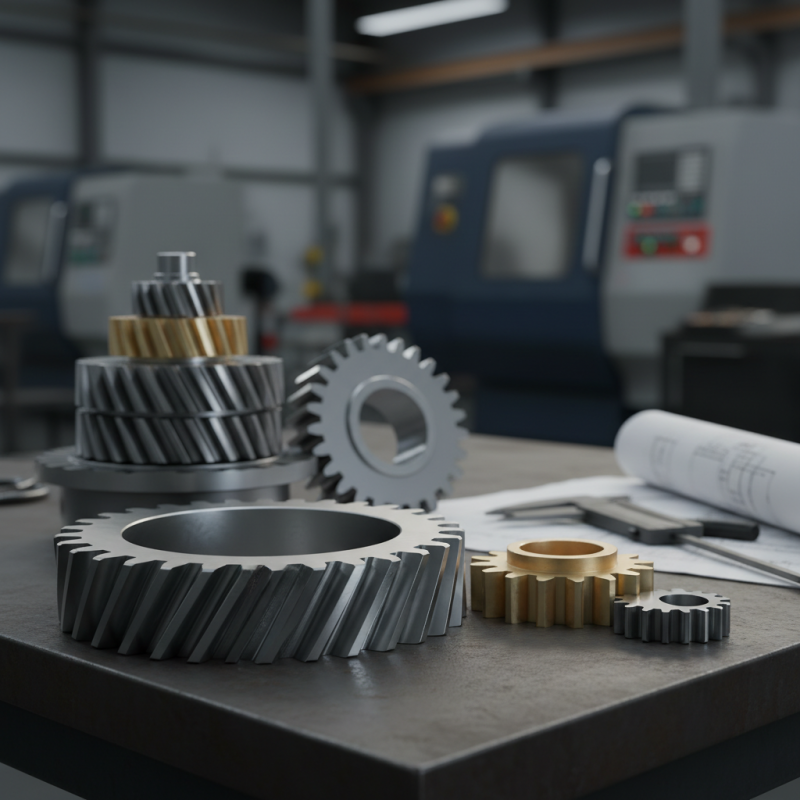
CNC gears play a crucial role in manufacturing. They are essential components for machines that require precision and efficiency. Understanding the basics of CNC gears can lead to better choices in the manufacturing process. These gears are designed for high accuracy, enabling seamless movement in machinery.
When selecting CNC gears, consider materials and design. Common materials include steel and aluminum, each offering unique benefits. Steel provides strength, while aluminum reduces weight. Design factors, like tooth profile and gear ratio, also matter. A miscalculation in these areas can lead to inefficiencies and increased wear on machines.
Many manufacturers overlook the importance of maintenance. Regular checks can prevent unexpected failures and costly downtime. Always monitor gear performance and replace them when signs of wear appear. It’s a misconception that high-quality gears require no upkeep. Recognizing this can enhance operational reliability.
Identifying Your Specific Manufacturing Requirements
When selecting CNC gears, understanding your manufacturing requirements is crucial. Production volume, precision level, and operational environment significantly impact your choice. Studies show that nearly 70% of manufacturing inefficiencies stem from improper gear selection. Knowing whether your project demands high torque or speed can direct you toward the right gear type.
Identifying material needs is also essential. Depending on the application, materials like steel, aluminum, and plastic might be appropriate. For instance, metal gears are more durable, while plastics can be beneficial in environments requiring corrosion resistance. A survey revealed that 55% of manufacturers encounter issues due to inadequate material choices.
Another critical factor is the compatibility with existing machinery. Gears must fit seamlessly into your setup. Misalignment can lead to processing failures, resulting in costly downtime. An estimated 30% of machinery malfunctions result from mismatched components. This highlights the importance of detailed assessments in your gear selection process.
How to Choose the Right CNC Gears for Your Manufacturing Needs?
| Gear Type |
Material |
Pitch Diameter (mm) |
Number of Teeth |
Load Capacity (N) |
Application |
| Spur Gear |
Steel |
20 |
15 |
5000 |
General Machinery |
| Helical Gear |
Aluminum |
30 |
20 |
4000 |
Automotive |
| Bevel Gear |
Brass |
25 |
10 |
3000 |
Aerospace |
| Worm Gear |
Cast Iron |
35 |
25 |
6000 |
Heavy Machinery |
Evaluating Material Options for CNC Gears
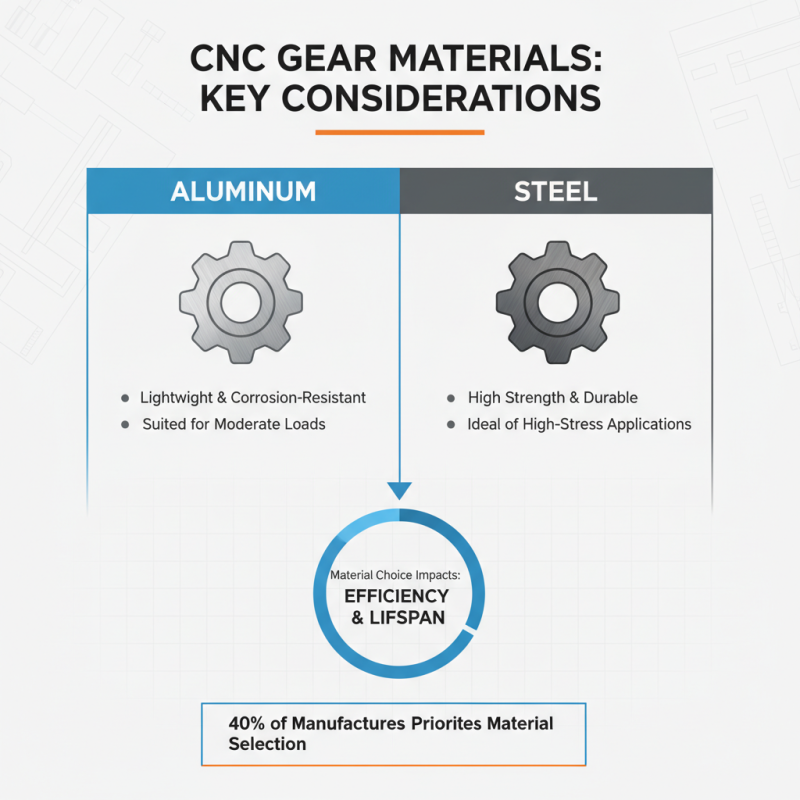
When selecting CNC gears, the choice of material is critical. Different materials offer various properties, influencing performance and longevity. Aluminum is lightweight and corrosion-resistant, but may not endure extreme conditions. Steel, on the other hand, provides excellent strength and durability, making it preferable for high-stress applications. According to a report from the Manufacturing Institute, nearly 40% of companies prioritize material selection to enhance both efficiency and product lifespan.
Plastics are becoming more popular in CNC gear applications. They are lighter and often more cost-effective than metals. Reports indicate that gears made from high-performance plastics can last as long as metal counterparts in specific situations. However, the environment affects their performance. Factors like temperature and humidity can lead to changes in mechanical properties. In some applications, the reliability of plastic gears can raise concerns.
Choosing the right material also requires consideration of manufacturing processes. Some materials, like titanium, offer exceptional performance but can be challenging to machine. This can lead to higher production costs. Therefore, manufacturers must balance performance with practicality. While advanced materials may promise superior benefits, their limitations can impact the end product. Each option carries trade-offs that need careful evaluation.
Assessing Tolerances and Precision in Gear Production
When selecting CNC gears, tolerance and precision are critical. Industry reports indicate that a tolerance of
±0.01 mm is often required for high-precision applications. This tight specification ensures gears mesh properly,
leading to better performance and lifespan. In contrast, less demanding applications might accept tolerances of
±0.1 mm. Always assess the specific needs of your manufacturing process to determine the best fit.
Precision machining in gear production contributes significantly to functional performance. According to a recent study, even a minor deviation in gear dimensions can lead to inefficiencies. These can include increased wear and decreased load capacities. It is essential to analyze each gear's application environment. Factors like speed, load, and material compatibility will influence the precision required.
The importance of rigorous testing cannot be overstated. Manufacturers often rely on advanced measurement tools to ensure adherence to specific tolerances. However, human error during setup can introduce inaccuracies. Retesting and adjusting processes can help mitigate such risks. Engaging in continuous quality assessments is a best practice, ensuring that gears meet the necessary specifications for optimal performance.
Selecting the Right Manufacturer for Your CNC Gears
Choosing the right manufacturer for CNC gears is crucial. You need someone who understands your specific requirements. Look for suppliers with proven experience in your industry. A detailed knowledge of gear manufacturing can make all the difference in quality and cost-effectiveness.
Tips for selecting a manufacturer: check their certifications and quality standards. Proper certifications guarantee they meet industry specifications. Visit their facility if possible. A tour can reveal their production capabilities and quality control processes. Listen to their customer service approach. Effective communication often means they value client relationships.
Consider their technology and equipment. Advanced machinery can produce precise gears, which improve reliability. However, a manufacturer that continually invests in updates shows commitment to quality. Don't overlook client reviews and testimonials. They provide an external view of a manufacturer’s reputation and reliability.