2026 Top CNC Gears Trends Buyers Must Know?
As we approach 2026, the landscape of CNC gears is evolving rapidly. Industry reports suggest that the global CNC gear market was valued at approximately $12 billion in 2022, with expectations of significant growth driven by advancements in manufacturing technologies. The increasing demand for precision-engineered components across sectors, including automotive and aerospace, highlights the importance of understanding emerging trends in CNC gears.
Recent studies indicate that automation and artificial intelligence are pivotal in enhancing gear production. The rise of Industry 4.0 requires manufacturers to adopt smart technologies. These developments lead to improved accuracy and efficiency in CNC gear production. However, the integration of these technologies raises questions about workforce adaptability and the financial implications for smaller manufacturers.
Moreover, sustainability remains a pressing concern. Companies are exploring new materials and processes that minimize environmental impact. Research shows that over 60% of manufacturers are now prioritizing eco-friendly practices in their production methods. While the advantages of these trends are clear, challenges such as initial investment and training need careful consideration. Understanding these dynamics is essential for buyers navigating the future of CNC gears.

The Growing Demand for CNC Gears in Automotive Industry by 2026
The automotive industry is experiencing a significant shift towards CNC gears. By 2026, demand for these components is expected to soar, driven by the rise in electric vehicles (EVs). According to a recent market report, the CNC gear market is projected to grow at a compound annual growth rate (CAGR) of 7.2% through 2026. This highlights its critical role in modern automotive manufacturing.
Manufacturers are increasingly favoring CNC gears for their precision and efficiency. These components allow for tighter tolerances, enhancing performance and durability in vehicles. Notably, EVs require even more robust gear solutions due to their unique powertrain designs. The complexity of electric drivetrains increases the necessity for sophisticated gear systems. This demand signals a need for continuous innovation in gear manufacturing processes.
However, the industry faces challenges. The supply chain for raw materials is under pressure, which could affect production rates. Additionally, not all manufacturers are equipped to handle the precision required for advanced CNC gears. Companies must invest in training and technology to meet the evolving standards in the market. Collaboration with suppliers may also be essential for addressing these challenges effectively.
Technological Innovations Shaping the Future of CNC Gear Manufacturing
The landscape of CNC gear manufacturing is evolving rapidly. Technological innovations play a crucial role in this transformation. One major trend is the adoption of AI in design processes. AI algorithms can analyze data and optimize gear shapes for better performance. This reduces iterations and saves time in production.
Another significant innovation is the integration of 3D printing technologies. This allows for more complex geometries in gear designs that were once impossible. However, issues like material strength and durability remain a concern. Manufacturers must carefully evaluate these aspects to ensure product reliability.
Automation in CNC machine operations is also on the rise. Robotics can improve precision and consistency in gear production. Yet, reliance on automation can lead to skill gaps among workers. Training and development will be essential for future success. Exploring these trends is important for anyone involved in CNC gear manufacturing.
Impact of Industry 4.0 on CNC Gear Production Efficiency and Precision
Industry 4.0 has revolutionized CNC gear production, enhancing efficiency and precision. Automation and data analytics are central to this change. Smart machines communicate seamlessly, allowing for real-time adjustments. This technology helps reduce waste and improve output quality. However, the shift is not without challenges. Many manufacturers struggle with integration and require skilled personnel to manage advanced systems.
Predictive maintenance is another key trend emerging from Industry 4.0. It minimizes downtime and extends machine life. Sensors monitor equipment health, identifying issues before they escalate. Yet, companies often underestimate the importance of training staff. Without proper knowledge, these systems can underperform and lead to inefficiencies.
Data-driven decision-making is vital for optimizing production processes. Access to real-time insights empowers businesses to make informed choices. Yet, navigating this data requires expertise. Many firms find themselves overwhelmed by the sheer volume of information. It highlights the need for ongoing education and adaptation in an evolving manufacturing landscape.
Sustainability Trends in CNC Gear Materials and Production Processes
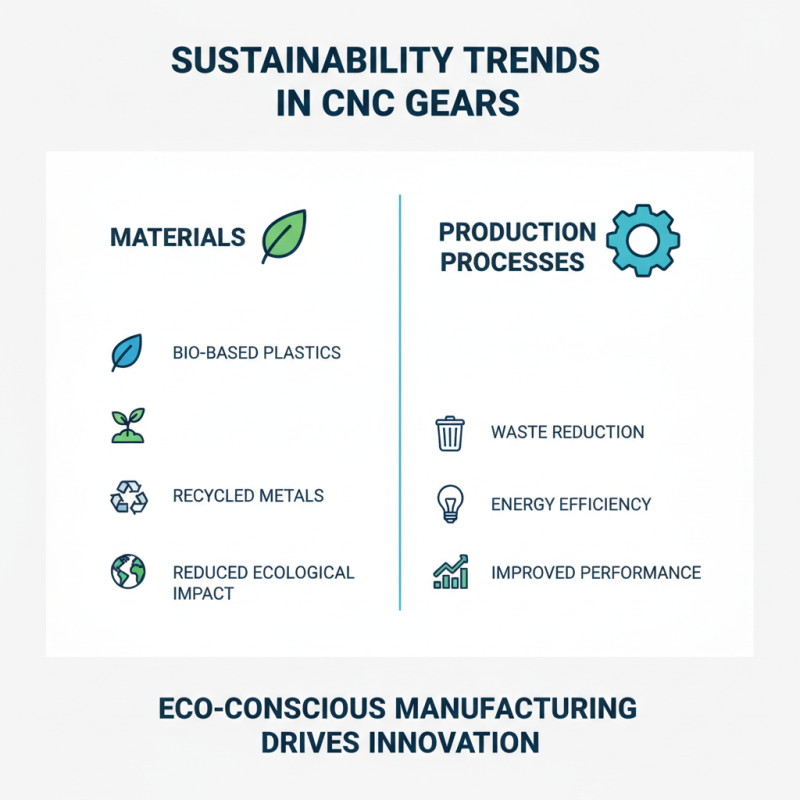
Sustainability is reshaping the CNC gears industry. As environmental concerns rise, buyers are becoming more conscious of the materials and processes used in production. Using sustainable materials can reduce ecological impact. CNC manufacturers are exploring bio-based plastics and recycled metals. These materials not only lessen waste but also offer improved performance.
Choosing the right materials is crucial. Buyers can ask suppliers about the sourcing of their materials. Check for certifications that indicate sustainability. It’s also beneficial to understand the life cycle of gear products. Shorter life cycles can increase waste, while durable materials can prolong usage.
In production, processes are evolving. More companies are adopting energy-efficient machinery. Technology is reducing the carbon footprint. However, transitioning to greener methods can be challenging. The upfront costs may deter some buyers. Yet, the long-term savings often outweigh these initial expenses. Consider assessing your supply chain for hidden sustainability opportunities. Focus on collaboration with vendors who prioritize eco-friendly practices.
Emerging Markets for CNC Gears: Opportunities and Challenges Ahead
Emerging markets for CNC gears present both opportunities and challenges that industry players must navigate.
As countries modernize their manufacturing sectors, the demand for precise and efficient gear solutions rises.
This creates openings for companies to expand their operations. However, understanding local needs and practices is essential.
Each market has unique characteristics that require tailored approaches.
In regions with developing economies, investments in technology can lead to significant advancements.
However, infrastructure issues and regulatory hurdles often present challenges.
Companies might face equipment shortages or skilled labor deficits in these markets.
Additionally, foreign competitors may already hold an established presence, making it difficult for new entrants.
Companies must be prepared for these realities as they strategize for growth.
Moreover, sustainability practices are becoming crucial in emerging markets.
Buyers are increasingly looking for eco-friendly production and materials.
This shift can be both an opportunity and a challenge.
Investing in sustainable practices requires upfront costs. In contrast, it can enhance a company's reputation and attract more customers.
Balancing profitability with ethical considerations is a necessary reflection for businesses venturing into these waters.