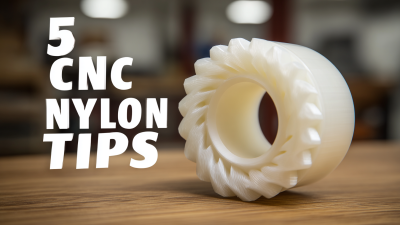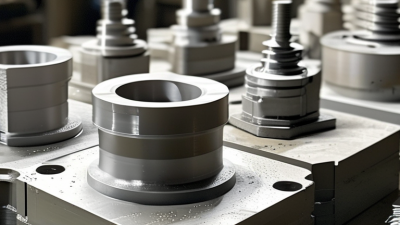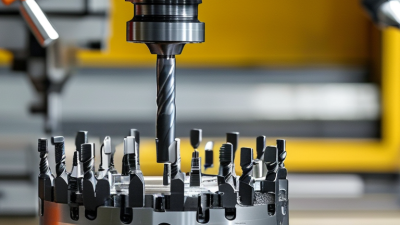
China’s CNC Nylon manufacturing sector sits at the intersection of advanced plastics and precision machining. China remains a major global plastics producer. PlasticsEurope’s Plastics—The Fast Facts 2024 reports worldwide plastics production of approximately 414 million tonnes in 2023. The report also highlights Asia’s central role in production and conversion. This regional strength supports a broad supplier base for machined nylon components.
Cnc Nylon is widely selected for gears, rollers, bushings, wear strips, and custom machine parts. Its low friction, impact resistance, and electrical insulation can reduce maintenance in demanding equipment. However, performance depends on more than the polymer name. PA6, PA66, cast nylon, and glass-filled nylon behave differently during cutting. Moisture changes dimensions. Tool wear affects surface quality. Poor storage can create avoidable problems.
Quality requires evidence.
A reliable Chinese supplier should provide resin information, batch traceability, inspection records, and dimensional reports. ISO 9001 certification can support process control, but certification alone proves little about every individual part. Buyers should also review machining tolerances, drawing interpretation, packaging, and production capacity. The ISO 2768 standard remains a useful reference for general dimensional tolerances, while application-specific tolerances may require tighter control.
MarketsandMarkets and Grand View Research both identify engineering plastics as growth areas, driven by lightweighting, electrical equipment, transportation, and industrial automation. Their findings support continued demand for precision polymer components. Still, market forecasts are not guarantees. That distinction matters.
This guide examines China’s leading Cnc Nylon manufacturers and suppliers through practical purchasing criteria. It considers materials, machining experience, testing, communication, customization, and delivery reliability. Supplier claims deserve verification. Samples often reveal more than polished brochures.
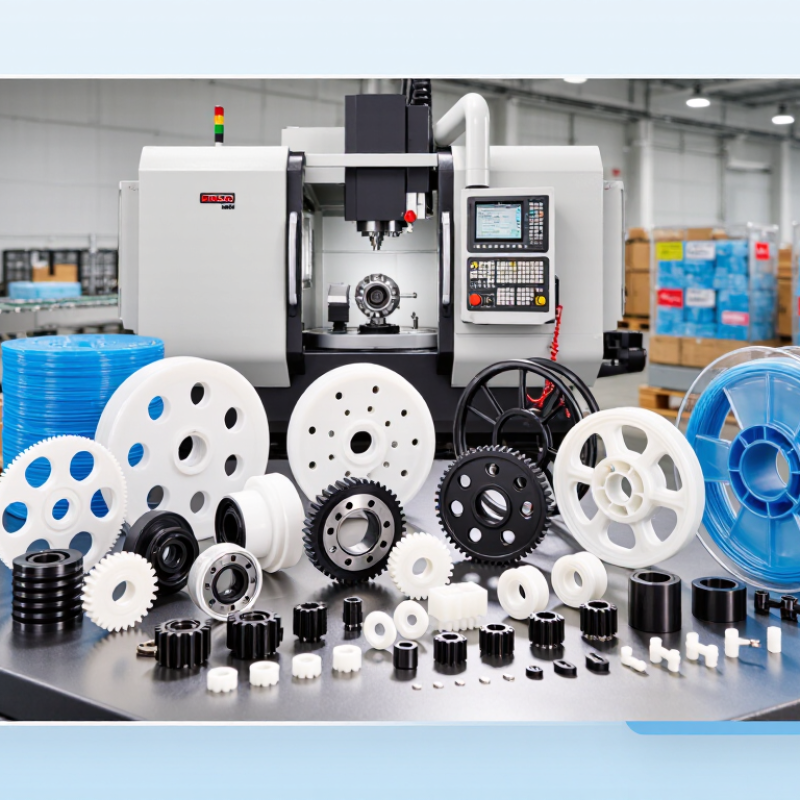
CNC nylon is nylon stock shaped by computer-controlled milling, turning, or routing equipment. It is not a special nylon formula. The term describes how the part is manufactured. Compared with injection molding, CNC machining suits prototypes, replacement parts, and small production runs. Common materials include cast and extruded nylon, with different grades offering varied strength, hardness, and wear resistance. The surface often feels smooth and slightly warm after cutting. Heat matters. Sharp tools, controlled feed rates, and proper chip removal help prevent melting or rough edges. Nylon also absorbs moisture, which can change its dimensions.
Industrial users machine nylon into bushings, guide rollers, gears, wear pads, seals, and electrical insulators. A nylon bushing can reduce noise around a rotating shaft and may require little lubrication. However, it is not ideal for every load or temperature. Continuous pressure can cause deformation, while moisture may affect fit and accuracy. Designers should confirm operating temperature, shaft finish, clearance, and chemical exposure before production. Suppliers should provide material data and consistent inspection records. Measuring a test part after conditioning it for 24 hours can reveal problems early. It is not perfect. A drawing may look correct, yet the finished part can still fit poorly when real heat, load, and humidity appear.
CNC nylon is nylon stock machined into precision parts such as gears, bushings, rollers, wear pads, guides, and insulation components. The chart compares representative tensile-strength midpoint values for commonly machined nylon grades. Actual performance varies with moisture content, temperature, reinforcement level, processing method, and material specification.
CNC-machined nylon is valued for low friction, impact resistance, and low density. A 2024 Grand View Research report estimates the global nylon market will expand at about 6% annually through 2030. That growth reflects demand for lighter mechanical parts, electrical components, and transport applications. Nylon is practical, but it is not dimensionally perfect.
PA6 offers strong toughness and machinability, while PA66 usually provides higher stiffness and heat resistance. PA12 absorbs less moisture and suits precision housings, guides, and pneumatic parts. Glass-filled grades can raise rigidity and reduce creep, but they may wear cutting tools faster. Typical unfilled nylon density is close to 1.13–1.15 g/cm³. ASTM D570 data also shows that moisture absorption can reach several percent, depending on grade and conditioning.
Moisture changes dimensions.
This detail matters during inspection. ISO 527 tensile testing commonly places unfilled nylon strength within roughly 45–85 MPa, although processing and humidity alter results. Machinists should use sharp tools, moderate cutting temperatures, and controlled fixturing. Excessive clamping can distort thin walls after release. In production reviews, many dimensional complaints trace back to conditioning differences, not poor CNC accuracy. That assumption deserves reconsideration. Engineers should specify the grade, moisture condition, tolerance, and operating temperature together. A polished surface may look precise, yet internal stress can still cause delayed movement.
China’s CNC nylon components begin with a careful review of the part drawing. Engineers check wall thickness, holes, threads, load points, and required tolerances. Material selection matters because nylon absorbs moisture and can change size during machining.
The manufacturer converts the approved CAD model into CAM toolpaths. CNC mills or lathes then remove material from a stable nylon billet. Sharp tools, controlled feed rates, and suitable clamping help prevent melting, vibration, and edge damage. Some workshops machine conditioned nylon to improve dimensional consistency. The process is not always perfectly linear. A trial part may reveal distortion near thin walls, requiring toolpath or fixture changes. Experienced technicians record these adjustments instead of relying on memory.
Tips: Ask for material certificates, inspection records, and a first-article sample. Confirm whether dimensions were measured before or after moisture conditioning. Request clear details about tolerance, surface finish, packaging, and production capacity. Nylon parts can look accurate but still move slightly after machining. That detail is easy to miss. Quality checks should include calipers, micrometers, gauges, and visual inspection of burrs or tool marks. A dependable supplier also reviews the drawing with the customer before production, especially when tight fits or moving assemblies are involved.
Choosing China CNC nylon manufacturers and suppliers requires more than comparing quotations. Nylon absorbs moisture, so machining conditions, storage, and inspection records directly affect dimensions. Ask for the nylon grade, batch certificate, moisture-control method, and machining tolerance before approving samples. ASTM D570 provides a recognized water-absorption test, while ISO 9001 supports documented quality procedures. These standards do not guarantee perfect parts. They make problems easier to trace.
Request a first-article inspection report with measurements from a calibrated coordinate-measuring machine. Check hole diameter, flatness, surface finish, and warpage at several points. A capable supplier should explain tool selection, cutting speed, cooling, and post-machining conditioning in practical terms. Vague answers deserve caution. The ISO Survey reports more than one million ISO 9001 certificates worldwide, yet certification alone cannot prove CNC capability. Audit the process, not just the certificate.
Review at least three production samples from different batches. Compare the same dimensions after 24 and 72 hours in controlled humidity. This may expose moisture-related movement that one sample hides. Ask for nonconformance records and corrective-action examples. Honest factories may show weaknesses. That is useful. Delivery performance also matters: compare promised dates with actual shipment data across several orders. Industry market reports consistently identify engineering plastics as a growing manufacturing segment, but demand growth can pressure capacity and inspection discipline. A low price may reflect thinner controls, not better efficiency. In-person or video audits remain worthwhile, although my own evaluation can still miss problems inside an unfamiliar workshop.
China Top CNC Nylon Manufacturers and Suppliers: Applications, Quality Standards, and Sourcing Considerations
CNC nylon parts serve rollers, bushings, gears, guides, and electrical supports. Their low friction and impact resistance suit demanding industrial assemblies. However, nylon absorbs moisture, which can change dimensions during storage and machining. Grand View Research estimates the global polyamide market will grow steadily through 2030, supporting wider use in engineered components. Applications are expanding, but material selection still requires care.
Quality should be verified through measurable documents, not attractive photographs. Ask for material certificates, batch traceability, dimensional inspection reports, and samples from the same production process. ISO 527 and ISO 178 can support tensile and flexural testing, while ISO 62 helps assess water absorption. ISO 9001-based procedures are useful, though certification alone does not guarantee stable machining. Plastics Europe reported 54.1 million tonnes of plastics production in Europe during 2023, showing the scale of the sector but not the quality of every supplier.
Tips: Confirm PA6, PA66, or reinforced grades before quoting. Specify moisture conditioning, tolerances, surface finish, and operating temperature. Compare first-article results, not only unit prices. A low quote may exclude inspection or protective packaging. That matters. Also review response time, tooling ownership, corrective-action records, and export documentation. No checklist is perfect; a small pilot order can reveal weaknesses that an audit misses.
| Evaluation Dimension | Relevant Data or Benchmark | Typical CNC Nylon Relevance | What Buyers Should Verify |
|---|---|---|---|
| Common Nylon Materials | PA6 and PA66 are widely used engineering polyamides. Cast nylon and extruded nylon are common forms for machining. | Suitable for gears, rollers, bushings, wear pads, guides, pulleys, and structural prototypes. | Confirm the exact polymer grade, production process, color, filler content, and material certificate. |
| Moisture Absorption | Polyamide absorbs moisture from the environment, which can change dimensions, stiffness, toughness, and electrical properties. | Critical for precision bores, sliding fits, gears, and components used in humid environments. | Request conditioning requirements, moisture-control procedures, storage conditions, and dimensional inspection timing. |
| Mechanical Performance | Mechanical properties vary significantly by PA type, moisture condition, temperature, orientation, and reinforcement. | Useful where low weight, impact resistance, sliding performance, and moderate load capacity are required. | Check tensile strength, tensile modulus, elongation, impact strength, hardness, and the test condition used. |
| Temperature Capability | Nylon performance decreases as temperature approaches its softening or melting range; the usable temperature depends on grade and load. | Appropriate for many room-temperature mechanical parts, but high-temperature applications require grade-specific validation. | Review continuous-use temperature, heat-deflection temperature, load, duty cycle, and safety margin. |
| Dimensional Tolerances | Machining tolerance is controlled by the drawing, part geometry, material stability, equipment, and inspection method; no universal tolerance applies to every nylon part. | Important for bearing seats, mating parts, seals, threads, and assemblies with controlled clearance. | Provide a fully dimensioned drawing with datums, GD&T where needed, surface-finish requirements, and critical-to-function dimensions. |
| Surface Finish | Surface finish depends on tool geometry, cutting parameters, workholding, material condition, and part design. | Affects friction, wear, sealing, appearance, and the fit of moving or mating components. | Specify an Ra value or comparable drawing requirement and confirm the measurement method and sampling location. |
| Applicable Material Standards | ISO 1874 covers polyamide molding and extrusion materials; ISO 1043-1 provides abbreviated terms for plastics and polymer types. | Supports consistent material identification and comparison between quotations. | Ask suppliers to state the applicable standard, grade designation, batch identification, and certificate scope. |
| Mechanical Test Standards | ASTM D638 and ISO 527 are commonly used for tensile properties; ASTM D256 and ISO 180 are used for impact testing. | Enables objective comparison of material data when specimen geometry and conditioning are equivalent. | Confirm test standard, specimen type, conditioning state, temperature, test speed, and laboratory traceability. |
| Quality Management | ISO 9001 is a quality-management-system standard; certification does not by itself guarantee a particular part tolerance or performance. | Helps structure document control, corrective actions, process monitoring, and inspection records. | Request a valid certificate, certification scope, issuing body, and evidence that the site producing the parts is covered. |
| Dimensional Inspection | Calipers, micrometers, height gauges, optical systems, and coordinate-measuring machines are selected according to feature size and tolerance. | CMM or optical inspection is useful for complex profiles, true position, concentricity, and multi-feature relationships. | Review calibration records, inspection plans, measurement uncertainty, sampling level, and a dimensional report format. |
| Chemical and Regulatory Compliance | RoHS restricts specified hazardous substances in electrical and electronic products; REACH addresses chemicals in the European market. | Relevant for parts incorporated into regulated products or supplied to customers requiring restricted-substance declarations. | Specify the required market, declaration format, revision date, material composition, and supporting test documentation. |
| Prototype Capability | Prototype production normally uses CNC turning, CNC milling, or a combination of both, depending on part geometry. | Useful for fit checks, functional testing, design validation, and low-volume production. | Assess drawing review, manufacturability feedback, sample lead time, first-article inspection, and engineering communication. |
| Production Scalability | Capacity depends on machine availability, tooling, fixturing, programming, inspection resources, and raw-material supply. | Important when moving from prototypes to repeat orders or larger batch quantities. | Request a realistic capacity plan, production schedule, repeatability evidence, and contingency arrangements. |
| Packaging and Storage | Parts should be protected from impact, contamination, deformation, and uncontrolled humidity during storage and transport. | Especially important for thin walls, long shafts, precision bores, and parts with tight mating dimensions. | Define individual protection, moisture protection where required, labeling, quantity control, and export packaging. |
| Quotation Comparison | A comparable quotation should include material grade, quantity, tolerance assumptions, finish, inspection, packaging, tooling, shipping terms, and lead time. | Prevents low initial prices from hiding exclusions, rework risk, or incomplete quality documentation. | Use the same RFQ package and request a line-by-line commercial and technical response. |
| Supplier Qualification | A robust qualification process normally includes document review, sample approval, capability assessment, and performance monitoring. | Reduces risks related to inconsistent material, unstable dimensions, missed delivery, and inadequate corrective action. | Evaluate technical competence, traceability, inspection capability, communication, confidentiality, and after-sales response. |
| Recommended RFQ Package | Include 2D drawings, 3D CAD files, material and grade, quantity, annual demand, tolerance requirements, surface finish, inspection needs, destination, and target schedule. | A complete RFQ improves quotation accuracy and makes offers from different Chinese suppliers easier to compare. | Require written confirmation of assumptions, deviations, substitutions, production location, lead time, and acceptance criteria. |