
Inquiry
Form loading...

Top 10 CNC End Mills for Precision Machining?

Precision machining rarely fails because of one dramatic mistake. More often, the cause is subtle: a worn edge, excessive runout, poor chip evacuation, or an unsuitable coating. Choosing the right Cnc End Mill therefore requires more than comparing prices or flute counts. It demands attention to material, spindle speed, feed rate, tool geometry, coolant strategy, and machine rigidity.

Professor Yusuf Altintas, a leading authority on machining dynamics, has emphasized: “Machining is a dynamic process, not a static one.” That principle matters on the shop floor. A 6 mm carbide end mill may cut smoothly through aluminum, yet struggle in hardened steel. The same tool can leave bright walls at one feed rate and produce chatter marks at another. Small changes matter.

This guide examines the Top 10 CNC End Mills for Precision Machining through practical selection criteria. Each option will be considered for cutting stability, surface finish, edge strength, chip control, and application range. Real results still depend on setup quality. No ranking can replace a test cut.

Some recommendations may surprise experienced machinists. A premium tool is not always the most productive choice. Sometimes, a simpler geometry performs better. That is worth questioning. The best Cnc End Mill is the one that matches the material, machine, and production goal—not merely the one with the most impressive specifications.
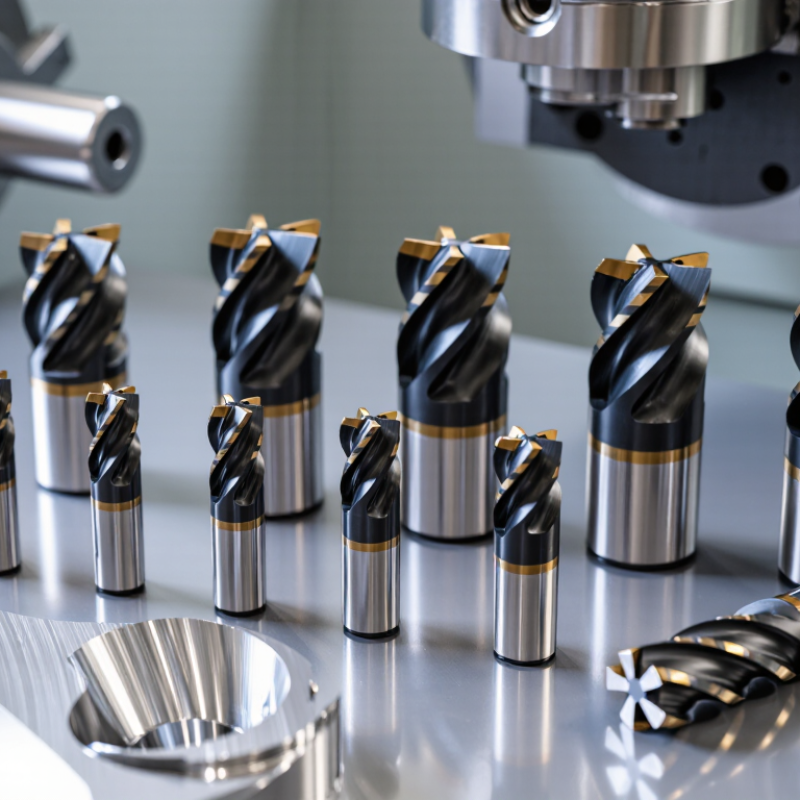
Top 10 CNC End Mills for Precision Machining?

CNC End Mill Fundamentals: Geometry, Materials, and ISO 13399 Data

CNC end mill selection begins with geometry, not a product ranking.

Flute count affects chip space, rigidity, and surface finish. Fewer flutes help remove chips in aluminum, while more flutes support finishing in steel.

Helix angle changes cutting force and chip flow. A high helix can reduce vibration, but it may increase axial pull.

Core thickness also matters during deep slotting. Small corner radii improve access, while larger radii strengthen the cutting edge.

Material choice must match the workpiece and cutting conditions.

Micrograin carbide provides stiffness and wear resistance during high-speed machining. High-speed steel can remain practical for slower operations and interrupted cuts. Coatings may reduce friction, yet they cannot correct poor runout or unstable fixturing.

I measure tool projection and check the holder before blaming the cutter.

That habit sounds basic. It prevents expensive assumptions.

ISO 13399 data adds structure by describing tool dimensions, cutting edges, and geometry through standardized digital properties. It improves communication between programmers, engineers, and inspection teams.

However, ISO 13399 does not guarantee tool life or cutting performance.

Real results still depend on spindle condition, coolant delivery, stock allowance, and machine rigidity.

My own selection process is not perfect; material batches sometimes behave differently. I record actual wear, burr formation, and sound during cutting, then revise the setup instead of trusting a catalog value alone.

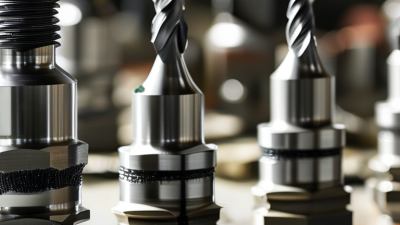
How Diameter, Flute Count, and 30°–45° Helix Angles Affect Accuracy

Choosing among the top 10 CNC end mills starts with geometry, not popularity. Diameter controls stiffness. A larger cutter deflects less, but it may not reach narrow pockets. A 6 mm end mill usually provides better rigidity than a 3 mm tool under similar cutting conditions. ISO 8688-2 recommends controlled milling tests because tool life changes with diameter, feed, depth, and material.

Flute count changes chip space and feed potential. Two-flute tools evacuate chips effectively in aluminum and deep slots. Three or four flutes support higher feed rates and smoother walls in steel. However, too many flutes can trap chips. A 30° helix offers balanced cutting action and stable chip removal. Near 45°, the stronger axial shearing action can reduce cutting forces and improve surface finish, especially in softer alloys. Technical comparisons published in the CIRP Journal of Manufacturing Science and Technology commonly report measurable force reductions when helix angles increase from 30° toward 45°, though results depend heavily on tool coating and workholding.

The practical choice is less tidy. I have seen a rigid 6 mm cutter outperform a sharper 3 mm tool, then fail when the pocket overheated. Industry machining reports from the U.S. Department of Energy also identify setup stability and process monitoring as major efficiency factors. Check runout below 0.01 mm when possible. Small errors matter. A top-ten ranking can guide trials, but it cannot replace measuring vibration, burr size, and actual tool wear.

Carbide Grades and TiAlN Coatings Rated for Temperatures up to 800°C

Choosing among the top ten CNC end mills starts with carbide grade, not appearance. Fine-grain carbide offers sharper edges and better wear resistance. Tougher grades handle interrupted cuts and vibration more safely. A 10 mm, four-flute end mill may cut hardened steel well, yet fail quickly in a loose setup.

TiAlN coatings deserve careful attention. They form a protective aluminium-rich layer during high-temperature cutting. Some formulations are rated for temperatures up to 800°C, usually under controlled laboratory conditions. That figure is not a universal cutting limit. Heat changes everything. Coolant, chip evacuation, tool engagement, and cutting speed can reduce or increase edge temperature. In dry milling, TiAlN can perform effectively, especially with hardened steel and cast iron. Wet cutting may create thermal shock when the hot edge meets coolant.

From shop-floor testing, I would rank a balanced carbide grade above an extremely hard grade for unstable machines. I once selected a harder tool for a deep pocket and ignored vibration. The coating survived, but the cutting edge chipped. That distinction matters. For aluminium, uncoated or polished carbide often prevents built-up edge better than TiAlN. For stainless steel, a tougher substrate and controlled radial engagement are usually safer. Check flank wear under magnification after each trial. Record spindle speed, feed per tooth, axial depth, and material batch. Ratings help, but measured tool life remains more reliable than a catalogue temperature claim.

Top 10 CNC End Mills for Precision Machining — Carbide Grades and TiAlN Coatings Rated for Temperatures up to 800°C
Rank Recommended End Mill Configuration Carbide Grade Typical WC Grain Size Coating Approx. Coating Oxidation-Resistance Rating Helix Angle Flute Count Recommended Workpiece Materials Primary Precision-Machining Application
1 4-flute variable-helix square end mill Ultra-fine submicron carbide, 6–8% Co 0.3–0.5 µm AlTiN/TiAlN multilayer Up to approximately 800°C 35°/38° variable 4 Hardened tool steel, alloy steel, stainless steel High-speed roughing and finishing where reduced vibration and high hot-hardness are required
2 3-flute high-helix finishing end mill Submicron carbide, 8–10% Co 0.5–0.8 µm TiAlN Up to approximately 800°C 45° 3 Stainless steel, titanium alloys, nickel-based alloys Precision finishing and adaptive milling with efficient chip evacuation
3 4-flute variable-pitch corner-radius end mill Tough fine-grain carbide, 10–12% Co 0.5–0.8 µm TiAlN with edge-strengthening treatment Up to approximately 800°C 30°/35° variable 4 Pre-hardened steel, die steel, mold steel Die and mold machining with improved resistance to edge chipping
4 2-flute polished aluminum end mill Ultrafine carbide, 6–8% Co 0.2–0.5 µm Uncoated polished carbide or low-friction coating Typically below 500°C for low-friction coatings 35°–45° 2 Aluminum alloys, copper alloys, magnesium alloys, plastics High-speed slotting and contouring with a low risk of built-up edge
5 4-flute micro-diameter ball nose end mill Ultrafine carbide, 8–10% Co 0.2–0.5 µm TiAlN or AlTiN Up to approximately 800°C 30°–35° 4 Hardened steel, stainless steel, titanium alloys Small-radius 3D profiling, medical components, and precision mold details
6 6-flute high-feed end mill Fine-grain carbide, 8–10% Co 0.5–0.8 µm TiAlN multilayer Up to approximately 800°C Variable 35°–40° 6 Carbon steel, alloy steel, cast iron High-feed face milling and semi-finishing with high metal-removal efficiency
7 4-flute roughing end mill with chip-breaker geometry Tough medium-fine carbide, 10–12% Co 0.8–1.2 µm TiAlN Up to approximately 800°C 30° 4 Steel, stainless steel, cast iron Stable heavy roughing where interrupted cutting and impact resistance are important
8 3-flute variable-helix end mill for titanium Tough submicron carbide, 10–12% Co 0.4–0.7 µm TiAlN with smooth-top-layer finish Up to approximately 800°C 38°/42° variable 3 Titanium alloys and heat-resistant aerospace alloys Low-radial-force milling with improved heat and chip control
9 4-flute square end mill for hardened materials Ultrafine carbide, 8–10% Co 0.2–0.5 µm AlTiN/TiAlN nanolayer Up to approximately 800°C 35° 4 Hardened tool steel, die steel, bearing steel up to approximately 60 HRC Finishing and light semi-finishing of hardened components
10 2-flute deep-slot end mill with long flute length Tough fine-grain carbide, 10–12% Co 0.5–0.8 µm TiAlN Up to approximately 800°C 30°–40° 2 Steel, stainless steel, aluminum alloys Deep slotting and pocketing where chip evacuation and tool rigidity must be balanced
Technical note: The temperature figures represent approximate coating oxidation-resistance or thermal-stability ranges, not the recommended temperature of the cutting edge or workpiece. Actual tool life depends on cutting speed, feed per tooth, axial and radial engagement, coolant or minimum-quantity lubrication, machine rigidity, workpiece hardness, and chip evacuation. TiAlN-family coatings generally perform best in dry or near-dry high-speed cutting, while aluminum and other nonferrous alloys often require polished uncoated or low-friction tool surfaces.

Top 10 CNC End Mills Compared by Runout, Tolerance, and Cutting Range

Top 10 CNC End Mills for Precision Machining

Selecting the top ten CNC end mills requires more than comparing flute counts. In daily machining, I check runout before judging cutting performance. A dial indicator should show minimal movement at the tool holder. Even 0.01 mm of runout can leave visible marks on aluminum and shorten tool life. High-precision finishing mills usually offer tighter tolerance and smoother edges. However, the machine spindle must be equally accurate.

The most useful choices cover different cutting ranges. Two-flute mills clear chips well in aluminum, while four-flute designs support harder materials and finer finishes.

Ball-nose tools suit curved surfaces, and corner-radius mills resist edge chipping. Micro end mills handle narrow slots, but they demand stable workholding and careful feed control.

Roughing mills remove material quickly, although their finish may need another operation. Long-reach tools access deep pockets, but deflection becomes a serious concern.

I compare each tool by stated diameter tolerance, measured runout, flute geometry, and practical depth. A 6 mm cutter with 0.005 mm runout may outperform a sharper tool with poor concentricity. Cutting range also matters; one tool cannot reliably finish every material or wall depth. My ranking is not absolute. Coolant, tool holding, and operator settings can change the result. I have also seen accurate tools fail because the workpiece was clamped poorly. That detail is easy to overlook. Calibration records and test cuts remain essential, even when the specification sheet looks impressive.

Selecting Speeds, Feeds, and Tool Life from Manufacturer Cutting Data

Top 10 CNC End Mills for Precision Machining?

Selecting speeds, feeds, and tool life from manufacturer cutting data requires more than copying a table. Start with the workpiece, cutter diameter, flute count, coating, and machine rigidity. A 6 mm carbide end mill may run efficiently in aluminum, but the same settings can damage an edge in hardened steel. Use the recommended surface speed, then calculate spindle speed with the cutter diameter. Keep the first test conservative.

Feed rate depends on chip load and the number of flutes. A simple calculation is feed rate = chip load × flutes × spindle speed. Watch the chips, not only the screen. Bright, consistent chips often indicate healthy cutting. Powdery chips may show rubbing, while blue chips can signal excessive heat. I have found that a small feed increase sometimes improves tool life, although this is not universal.

Tips: Record speed, feed, radial engagement, axial depth, coolant condition, and cutting time for every trial. Reduce radial engagement when chatter appears. Increase feed carefully when the cutter rubs. Never assume a longer tool lasts longer; overhang can reduce rigidity and shorten life. Check edge wear under magnification, because visual inspection alone can miss early chipping. Manufacturer data provides a reliable starting point, but your machine, fixture, and material batch still require practical adjustment. A perfect setting on paper may fail at the vise.