Selecting the right Cnc Axle supplier is a production decision, not merely a purchasing task. A failed axle can stop an assembly line, delay vehicle delivery, and weaken customer confidence. The supplier must prove capability through process control, traceability, testing, and consistent communication.
Grand View Research reports that the global automotive axle market was valued at approximately USD 69.52 billion in 2022. It also projects continued growth through 2030, driven by vehicle production, electrification, and demand for efficient drivetrains. Meanwhile, Deloitte’s automotive manufacturing research highlights rising pressure on suppliers to improve resilience, digital visibility, and quality performance. These trends make supplier selection more demanding. A polished website is not enough.
Quality expert Joseph M. Juran stated, “Quality does not happen by accident.” His principle applies directly to Cnc Axle sourcing. Buyers should examine machining accuracy, material certificates, heat-treatment records, inspection equipment, and corrective-action history. Ask to see real evidence. Check how a supplier handles a shaft that fails dimensional inspection at 6:00 a.m.
The seven tips in this guide focus on practical judgment. They cover technical experience, production capacity, quality systems, customization, delivery reliability, communication, and total cost. A low quotation may hide weak testing or expensive delays. That possibility deserves attention.
No checklist is perfect. Supplier risk can still be missed. However, structured evaluation reduces avoidable surprises and supports a stronger, more reliable axle supply chain.
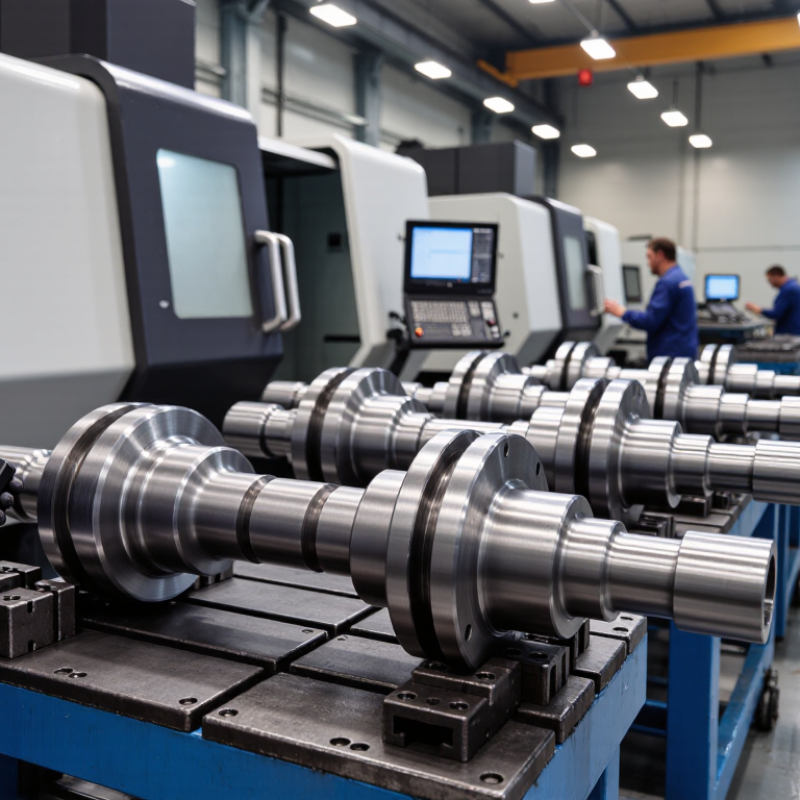
Before contacting a CNC axle supplier, define the axle’s working conditions in measurable terms. Record the required diameter, overall length, shoulder positions, thread type, and allowable runout. Specify the material and hardness range, especially when the axle carries repeated loads. A drawing with tolerances prevents expensive assumptions.
Application details matter just as much. Will the axle support a conveyor roller, compact vehicle, or rotating assembly? State the expected load, speed, duty cycle, and direction of force. Include operating temperature, moisture, dust, and exposure to chemicals. These factors influence material selection, surface treatment, sealing, and inspection requirements. Small details matter.
Do not describe performance with vague words like “strong” or “precise.” Provide figures, such as a 500-kilogram radial load or a 0.02-millimeter runout limit. Ask how the supplier measures these values and which inspection records are available. In practical sourcing work, missing datum references often create problems during assembly. I have seen a shaft pass dimensional inspection yet fail because the mating bearing seat was defined from the wrong reference. That mistake is easy to overlook. Recheck the drawing. Also question your own specifications. An unnecessarily tight tolerance can increase machining cost without improving the application. Share sample parts, assembly photos, and failure history when possible. This gives the supplier useful engineering context.
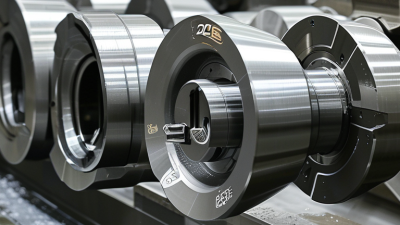
A capable CNC axle supplier should prove its machining capacity, not merely describe it. Ask which turning centers, milling machines, and grinding systems are available. Confirm their working diameters, axle lengths, material limits, and achievable tolerances. A supplier may claim tight precision, yet lack suitable equipment for your actual design.
During a supplier review, request sample inspection reports and process records. Look for coordinate measuring machines, calibrated gauges, surface testers, and documented inspection intervals. Technical expertise also appears in practical questions. Can the engineer identify a difficult datum? Can the team suggest better fixturing or reduce unnecessary machining? These details reveal experience beyond sales language.
Ask how the supplier handles prototypes, small batches, and repeated production. Reliable teams should explain cycle times, tool-life controls, heat-treatment coordination, and traceability from raw material to shipment. I once focused too heavily on quoted tolerances and overlooked fixture stability. That mistake showed during pilot production. The supplier corrected it, but the delay was avoidable. A factory tour can expose crowded workstations, unclear labeling, or weak maintenance habits. Do not ignore those signs. Request a capability study on critical axle features, especially runout, concentricity, and spline accuracy. The best technical partner will discuss limitations openly and recommend a realistic production plan. Candor matters.
7 Tips for Choosing the Right CNC Axle Supplier
Evaluate Materials, Quality Control, and Product Certification
A dependable CNC axle supplier should explain material choices in practical terms. Ask whether the axle uses alloy steel, stainless steel, or another specified grade. Request material certificates showing chemical composition, heat treatment, and batch traceability. Hardness and tensile results should match the drawing, not merely a general specification. Small differences can affect fatigue life.
Review the supplier’s quality control process before discussing price. Check how operators verify diameter, concentricity, thread accuracy, and surface finish. A coordinate measuring machine, calibrated gauges, and documented inspection plans indicate disciplined production. Ask for sample inspection reports and nonconformance records. Honest suppliers can explain a rejected part without hiding uncomfortable details. That matters.
Product certification also deserves careful examination. Confirm whether certificates apply to the actual facility and manufacturing process. ISO 9001 can support process consistency, but it does not prove every axle is perfect. For safety-related applications, request applicable industry certifications, test reports, and signed declarations. Verify certificate numbers with the issuing organization when possible. A polished document is not enough. Traceability is essential. Some suppliers provide impressive paperwork but weak production evidence. That mismatch should invite further questions. I would also assess packaging, corrosion protection, and response time during a technical inquiry. These details reveal daily reliability. No supplier is flawless, and an occasional process weakness may be acceptable when corrective actions are clear, dated, and verified.
| No. | Evaluation Dimension | What to Verify | Objective Benchmark or Document | Suggested Weight | Recommended Score |
|---|---|---|---|---|---|
| 1 | Material Selection and Traceability | Confirm the axle material, heat-treatment condition, mechanical properties, and batch traceability. | Material test certificate to EN 10204 Type 3.1; grade and heat number must match the purchase order and product markings. | 20% | 0–5 |
| 2 | CNC Machining Capability | Assess equipment suitability for turning, milling, drilling, keyways, splines, and concentric features. | Review machine capability, work envelope, tooling control, calibration records, and sample-part inspection results. | 15% | 0–5 |
| 3 | Dimensional and Geometric Quality Control | Check control of diameter, length, runout, concentricity, perpendicularity, and other critical-to-function features. | Inspection plan based on ISO 1101 for geometrical tolerancing; use calibrated CMM, micrometers, gauges, and runout fixtures where applicable. | 20% | 0–5 |
| 4 | Process Control and Inspection Records | Evaluate first-article inspection, in-process checks, final inspection, nonconformance handling, and corrective actions. | Documented control plan, inspection reports, calibration certificates, lot records, and corrective-action evidence such as 8D reports. | 15% | 0–5 |
| 5 | Product Certification and Management Systems | Verify that the supplier’s certifications are current, relevant to the production site, and within the certification scope. | ISO 9001 certification for quality management; IATF 16949 when automotive customer requirements apply; certificate validity and scope must be confirmed. | 10% | 0–5 |
| 6 | Surface Treatment and Functional Testing | Assess corrosion protection, hardness, surface finish, coating thickness, balancing, and load-related testing where required. | Defined surface-finish requirement in Ra or another specified parameter; coating or plating records; hardness and functional test reports tied to the lot. | 10% | 0–5 |
| 7 | Delivery Reliability and Technical Support | Review lead-time consistency, capacity planning, engineering communication, packaging, and response to quality issues. | Compare quoted lead time with demonstrated delivery performance; require documented packaging specifications and a defined escalation process. | 10% | 0–5 |
| Total Evaluation Weight | 100% | Maximum: 5.0 | |||
Tip 1: Compare the complete price, not only the quoted unit cost. Ask about tooling, inspection, packaging, shipping, and revision fees. A low quote can mislead. Request a sample invoice with every charge listed. In production reviews, hidden setup costs often change the real budget.
Tip 2: Measure lead times against your actual schedule. Ask for prototype, approval, production, and delivery dates separately. Confirm the supplier’s response when materials arrive late. Fast promises sound attractive, but stable delivery matters more.
Tip 3: Test customization before placing a large order. Share drawings, tolerances, surface requirements, and load conditions. A capable supplier should explain manufacturing limits clearly. They should also suggest practical changes when a design is costly or difficult to machine. I have learned that vague specifications create avoidable rework.
Tip 4: Check scalability with evidence. Ask how output changes from ten axles to several thousand. Review machine capacity, inspection methods, staffing, and backup processes.
Tip 5: Request quality records from comparable work. Look for dimensional reports, material certificates, and traceability procedures.
Tip 6: Clarify communication routines. Weekly updates may prevent small delays from becoming expensive problems.
Tip 7: Compare suppliers using the same questions and volumes. Even a careful checklist can miss something. Leave room for review before commitment.
Choosing the right CNC axle supplier begins with communication, not a low quotation. Ask how quickly engineers answer technical questions and whether they confirm drawings, tolerances, materials, and delivery dates in writing. A capable contact should explain production limits clearly, instead of promising everything. Request a sample communication record, such as an inspection report or revision notice. Silence is data.
After-sales support becomes important when an axle arrives with unusual vibration, incorrect dimensions, or damaged packaging. Before ordering, ask who handles complaints, how evidence is reviewed, and how replacement parts are shipped. Reliable suppliers usually provide traceable batch numbers, inspection results, and clear response times. Test this process with a detailed question. Their reply often reveals more than a sales presentation.
Supplier reliability also requires practical verification. Review recent delivery records, production capacity, quality-control procedures, and the experience of the technical team. If possible, arrange a video audit or visit the workshop. Look for calibrated measuring tools, protected storage, and organized process records. I once focused too heavily on machining accuracy and overlooked slow feedback. That mistake delayed testing. A second supplier may cost slightly more, but dependable communication can prevent expensive downtime. Be careful with vague guarantees. Ask for measurable commitments, then record every change before production starts.