What is a Cnc Axle and How is it Used in Modern Manufacturing?
In the realm of modern manufacturing, the Cnc Axle plays a vital role. This component is pivotal in creating precision parts used in various industries. CNC, or computer numerical control, allows for exact movements in machining processes. As technology has evolved, the Cnc Axle has become integral in enhancing production efficiency.
Understanding the function of a Cnc Axle can elucidate its importance. It ensures consistency and accuracy in the manufacturing of complex components. The use of Cnc Axles streamlines operations, reducing both time and labor costs. Yet, there are challenges. Not every manufacturer fully grasps the nuances of CNC technology. Some may overlook critical maintenance, leading to issues in production lines.
Emerging trends show a growing reliance on Cnc Axles. Industries are increasingly adopting automated solutions. This shift raises questions about workforce impacts. While efficiency improves, does it compromise craftsmanship? Addressing these concerns is crucial for the industry's future.
Definition and Purpose of CNC Axles in Manufacturing
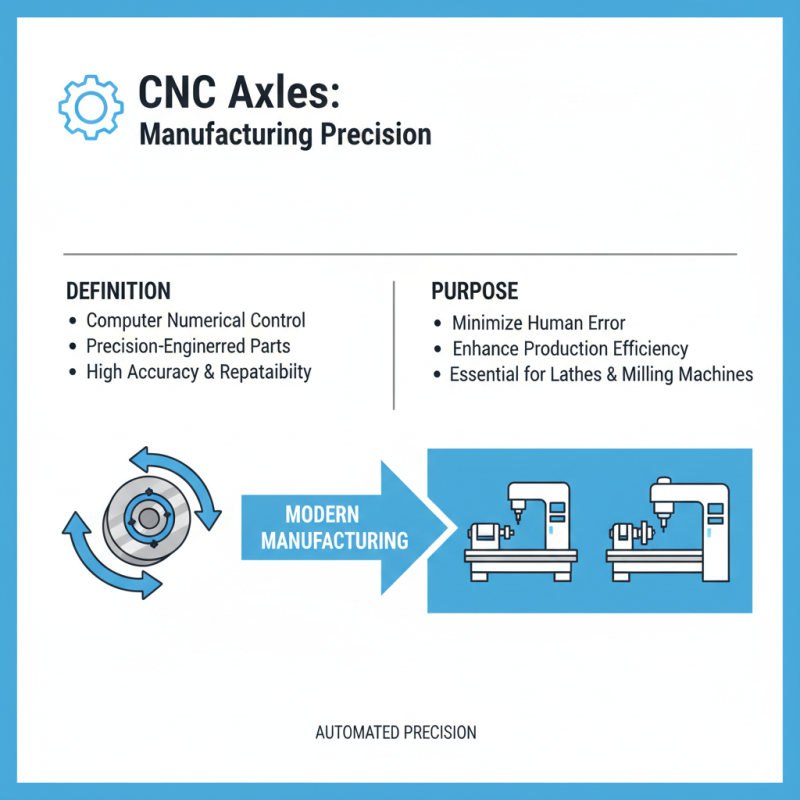
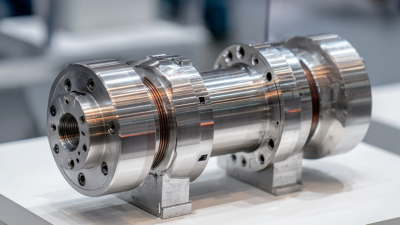
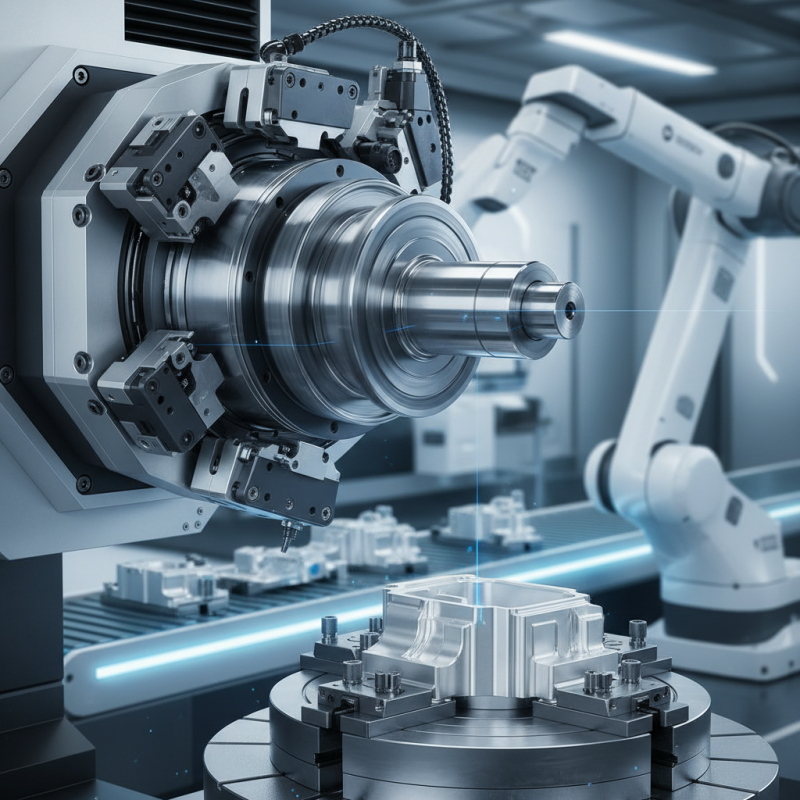
CNC axles play a crucial role in modern manufacturing. These precision-engineered parts are essential for many machines, including lathes and milling machines. CNC, or Computer Numerical Control, allows for high accuracy and repeatability. By automating movements, CNC technology minimizes human error and enhances production efficiency.
In manufacturing, CNC axles ensure consistent performance and durability. They are designed to handle significant stress during operations. This reliability improves the overall quality of the finished product. Companies can rely on CNC axles to produce multiple pieces swiftly without compromising precision.
Tip: Always ensure proper maintenance of CNC machinery. Regular checks can prevent breakdowns and extend the life of your axles.
The design of CNC axles involves advanced engineering practices. This includes selecting suitable materials that offer strength and resistance to wear. However, overlooking the importance of material choice may lead to significant issues, affecting performance and safety.
Tip: Consult with experts when designing custom CNC axles. Their expertise can guide you toward the best solutions for specific challenges.
Types of CNC Axles and Their Applications
CNC axles play a crucial role in modern manufacturing processes. They are essential components in various machines, ensuring precision and efficiency. There are different types of CNC axles tailored for specific applications. For instance, linear CNC axles are commonly used in milling machines. They provide smooth motion and high accuracy in machining operations.
Another type, rotary CNC axles, are key in lathes. They facilitate the rotation of materials, allowing for intricate shaping. These axles must withstand high forces and speed, requiring robust engineering. Various materials, such as steel or aluminum, are utilized based on the desired strength and weight.
While CNC axles are reliable, their design and implementation can pose challenges. Improper alignment can lead to significant tolerances. This may affect overall product quality. Regular maintenance and precise calibration are essential to mitigate such issues. Balancing speed and precision often requires careful thought. Each decision impacts the manufacturing output and quality.
Usage of CNC Axles in Modern Manufacturing
The CNC Machining Process for Axle Production
CNC machining is vital in modern axle production. This process utilizes computer-controlled tools to create precise components. Axles, essential in various transportation applications, require accuracy. Reports indicate that precision machining increases efficiency by up to 30%. This accuracy is crucial, as even minor defects can lead to major issues.
In the CNC machining process, raw materials are fed into milling machines or lathes. The computer directs these machines to cut, shape, and finish the axle. Tools can create complex geometries that manual machining can't achieve. Research shows that a single CNC machine can replace multiple traditional machines, reducing operational costs. This shift towards automation is influencing industry workflows.
However, challenges remain. Skilled technicians must oversee the CNC machines. The reliance on technology can lead to skill gaps in the workforce. Furthermore, initial setup costs for CNC systems can be high. Companies often struggle to balance between automation and manual processes. These factors require ongoing assessments to ensure production efficiency.
What is a Cnc Axle and How is it Used in Modern Manufacturing? - The CNC Machining Process for Axle Production
| Dimension |
Specification |
Material |
Manufacturing Process |
Application |
| Length |
1200 mm |
Alloy Steel |
CNC Machining |
Automotive |
| Diameter |
85 mm |
Carbon Steel |
CNC Turning |
Bicycle |
| Weight |
7.5 kg |
Aluminium Alloy |
CNC Milling |
Motorcycle |
| Finish |
Polished |
Stainless Steel |
CNC Grinding |
Heavy Machinery |
Advantages of Using CNC Axles in Modern Manufacturing
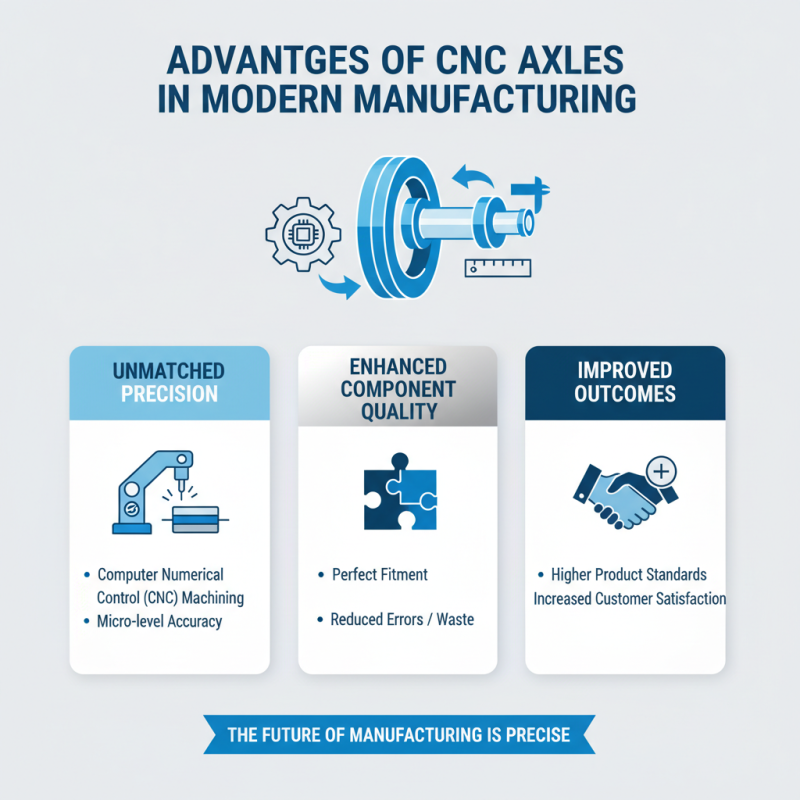
CNC axles represent a significant advancement in modern manufacturing. Their precision is unmatched. These axles, created through Computer Numerical Control (CNC) machining, enhance the accuracy of component production. Manufacturers can produce parts that fit perfectly, reducing the risk of errors. This leads to higher quality products and improved customer satisfaction.
One of the key advantages of CNC axles is their ability to streamline production. Automated processes reduce the need for extensive manual labor. This not only cuts costs but also minimizes human error. In sectors like automotive and aerospace, such precision is crucial. Furthermore, CNC machines can work continuously, boosting efficiency.
There are challenges as well. Not all designs lend themselves to CNC production. Some intricate details may require refinement. Moreover, the initial setup cost for CNC machinery can be steep. Manufacturers must weigh these factors carefully. Balancing efficiency with design complexities is essential for optimal results. Overall, CNC axles play a vital role but require thoughtful integration into the manufacturing process.
Future Trends in CNC Axle Technology and Manufacturing Practices
CNC axle technology is evolving rapidly in modern manufacturing. This innovative method enhances precision and efficiency. Manufacturers increasingly adopt CNC axles for their ability to produce complex shapes with high accuracy. The automation levels are rising, which minimizes human error and speeds up production times.
Looking ahead, we see several emerging trends in CNC axle production. For instance, the integration of artificial intelligence promises improvements in operational efficiency. AI algorithms can predict maintenance needs, reducing downtime. Another trend is sustainable manufacturing. Companies are exploring eco-friendly materials and processes, although these shifts may pose challenges in initial investment.
Yet, the rise of these technologies is not without its pitfalls. Many manufacturers struggle to adapt to new systems, leading to temporary setbacks. Moreover, the training of skilled personnel remains a vital concern. As CNC technology advances, continuous learning will be crucial for success in the field. This evolution opens doors but requires careful navigation.